



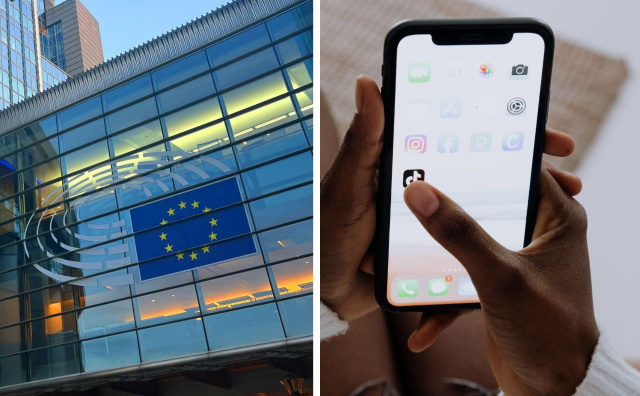

The European Commission has launched formal proceedings against TikTok, suspecting the social media platform of breaching the Digital Services Act (DSA) during Romania’s presidential election.
The investigation follows allegations of Russian interference, with Romania’s intelligence services identifying TikTok as a potential tool for spreading disinformation and manipulating election outcomes.
Concerns center on TikTok’s recommendation algorithm and its management of political advertisements, both of which are suspected of inadequately mitigating risks to the election process. If found in violation of EU law, TikTok could face fines of up to 6% of its global revenue.
Foreign Interference Sparks Probe
The controversy arose after Romania’s November 24 presidential election, which saw the unexpected rise of independent nationalist and Eurosceptic candidate Alexandru Georgescu.
The results were annulled when Romania’s Constitutional Court confirmed reports of foreign interference. Investigators pointed to the proliferation of content promoting Georgescu on TikTok, allegedly amplified by fake accounts and bots, as a significant factor in the interference.
The European Commission’s investigation aims to determine whether TikTok’s algorithms were manipulated to promote such content and whether the platform failed to address these risks adequately.
European Commission President Ursula von der Leyen emphasized the gravity of the situation, stating, “When election interference is suspected, swift and decisive action is crucial. Online platforms, including TikTok, must be held accountable under EU law.”
Focus on Recommendation Algorithms
At the end of November, the European Commission requested detailed information from TikTok regarding its handling of algorithmic processes during the election period.
A “retention order” was subsequently issued, requiring TikTok to provide data on its recommendation systems and content moderation measures from November 24, 2024, to March 21, 2025.
The Commission’s primary focus is on whether TikTok’s algorithms were biased in a way that could have amplified politically charged or misleading content.
Questions also linger over the platform’s transparency in labeling and managing political advertisements during the campaign.
This marks the first formal investigation of TikTok under the DSA, a groundbreaking EU regulation designed to ensure accountability among online platforms, particularly in safeguarding democratic processes.
Potential Penalties and Broader Implications
If the investigation confirms violations, TikTok could face significant penalties. The DSA allows for fines of up to 6% of a company’s global turnover for non-compliance. Given TikTok’s massive user base and revenue streams, the financial repercussions could be substantial.
Beyond the financial penalties, the case highlights broader concerns about the role of social media platforms in shaping political discourse and election outcomes.
The European Commission’s actions against TikTok are part of a wider initiative to enforce stricter oversight of digital platforms and curb foreign interference in EU member states’ elections.
TikTok has not yet publicly commented on the investigation but is expected to cooperate with the Commission’s inquiries.
As the investigation unfolds, the European Commission’s findings will likely set a precedent for holding social media platforms accountable under the DSA, underscoring the EU’s commitment to protecting democratic integrity in the digital age.