



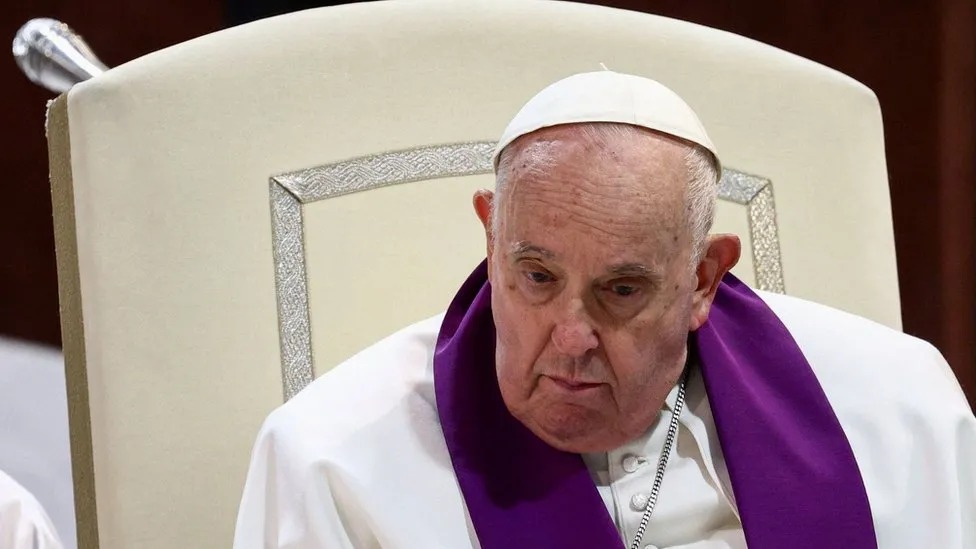

In a resolute stance against external pressure, Ukraine has firmly rejected a call by Pope Francis for Kyiv to negotiate an end to its war with Russia.
The Ukrainian government, led by President Volodymyr Zelensky, has emphasized its commitment to defending the nation’s sovereignty and territorial integrity, dismissing the Pope’s remarks as “virtual mediation.”
The controversy arose following an interview with Swiss broadcaster RSI, scheduled to air on 20th March as part of a cultural program.
In the interview, Pope Francis was quoted as advocating for negotiation in the face of adversity, symbolized by the imagery of the “white flag.”
However, Ukrainian officials swiftly rebuffed the suggestion, asserting that they would never raise any flag other than the country’s blue and yellow colours.
President Zelensky, in his nightly video address, refrained from directly addressing the Pope’s comments but lauded the efforts of Ukrainian chaplains on the frontline, highlighting their role in protecting life and humanity amidst the ongoing conflict.
Ukrainian Foreign Minister Dmytro Kuleba echoed this sentiment on social media, emphasizing the significance of the national flag as a symbol of resilience and determination.
The Pope’s remarks sparked a wave of criticism from Ukrainian officials and citizens alike.
Ukraine’s ambassador to the Vatican drew parallels between the Pope’s comments and historical attempts at appeasement, likening them to those who advocated talks with aggressors during World War Two.
Polish Foreign Minister Radek Sikorski questioned whether the Pope would urge Russian President Vladimir Putin to demonstrate similar courage in withdrawing his army from Ukrainian territory.
Responding to the backlash, Vatican spokesman Matteo Bruni clarified that the Pope’s reference to the “white flag” was intended to symbolize a truce achieved through negotiation, not capitulation. He reiterated that negotiations should never be construed as surrender.
The controversy comes at a critical juncture for Ukraine as Russian forces continue their aggressive advance.
Despite ongoing international support, including efforts to provide financial assistance from the United States and European allies, Ukraine finds itself on the defensive more than two years after Russia’s full-scale invasion.
Recent territorial gains by Russian troops, including the capture of the strategic town of Avdiivka, underscore the challenges facing Ukrainian forces on the ground.
As Ukraine braces for further aggression, the nation remains steadfast in resisting external pressures and defending its sovereignty.
The rejection of the Pope’s call for negotiation underscores Ukraine’s resolve to confront Russian aggression head-on, relying on its strength and the support of allies to withstand the challenges ahead.
This article was created using automation technology and was thoroughly edited and fact-checked by one of our editorial staff members