



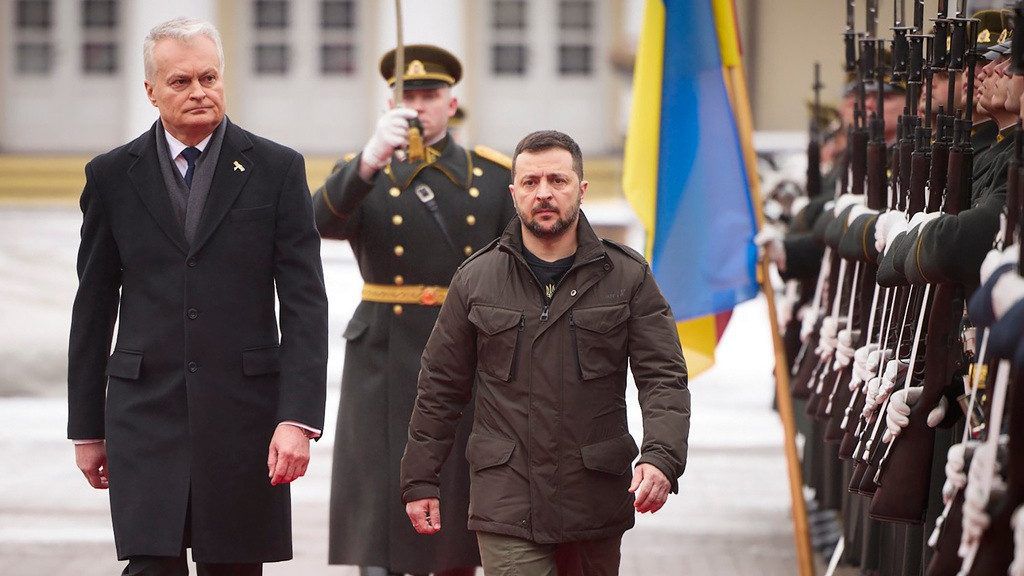

Ukrainian President Volodymyr Zelensky embarked on an unannounced visit to Lithuania, a crucial ally in Kyiv’s ongoing struggle against Russia’s invasion.
The visit, which comes at a time of heightened tensions and relentless attacks, underscores the urgency with which Zelensky seeks international support and addresses critical issues facing Ukraine.
Diplomatic Agenda: War, Integration, and Defense Systems
Lithuanian President Gitanas Nauseda welcomed Zelensky, emphasizing discussions on the war, Ukrainian integration into the European Union (EU) and NATO, and the pressing need for cooperation on electronic warfare and drones.
This visit marks a strategic effort to strengthen ties with Baltic nations, known for their steadfast support for Ukraine as opposed to wavering sentiments in Washington.
Amidst sustained Russian airstrikes causing havoc in Ukraine, Zelensky pointedly mentioned the dire need for modern air defence systems.
Speaking at a press conference in Vilnius alongside President Nauseda, Zelensky expressed, “What we are sorely lacking is modern air defence systems.”
The Ukrainian president highlighted the recent onslaught by Russia, with 500 missile and drone strikes in the closing days of December and early January, resulting in casualties and infrastructure damage.
“I think you’ve seen, and journalists know the details, that in the last days of December, the ‘holiday’ days for us, and in the first days of January, Russia attacked civilian infrastructure, people, kindergartens, schools, electricity”.
“In total, there were 500 missile and drone strikes. We were able to repel an average of 70% of these attacks. Unfortunately, there were casualties. My condolences to those who lost their loved ones,” Zelensky stated.
Strategic Baltic Tour: Unity in the Face of Adversity
Zelensky’s arrival in Lithuania is part of a broader Baltic tour, with visits to Latvia and Estonia on the agenda.
The timing of the visit suggests a concerted effort to garner support from Baltic nations that have consistently stood by Ukraine during the ongoing conflict.
In a Telegram post, Zelensky mentioned his intention to visit the other two Baltic states, emphasizing the importance of regional unity in the face of common threats.
Historical Resonance and Baltic Solidarity
Lithuania, the first country to break away from the Soviet Union in 1990, holds a unique historical perspective on Russian aggression.
Lukiskes Square, once home to a massive statue of Lenin, witnessed celebrations in 1991 when Lithuania separated from the Soviet bloc. This historical resentment towards Russia has fueled Lithuania’s unwavering support for Ukraine.
Upon arrival in Vilnius, Zelensky expressed gratitude towards Lithuania for its steadfast support since 2014, especially during Russia’s full-scale aggression.
The Kiel Institute for the World Economy reports that Lithuania has committed around 1.4% of its GDP in aid for Ukraine, ranking as the second-highest among Kyiv’s allies, surpassed only by Norway.
NATO and Ukraine’s Quest for Membership
Zelensky’s visit to Lithuania echoes his urgency to solidify Ukraine’s path to NATO membership. During the NATO summit in July 2023, Zelensky pressed for a clear roadmap and timeline for Ukraine’s accession.
While US President Joe Biden emphasized that NATO membership couldn’t be granted amid ongoing conflict, the alliance streamlined Ukraine’s path, eliminating the cumbersome Membership Action Plan.
In a speech at Lukiskes Square during the summit, Zelensky declared that “Ukraine will make NATO stronger.”
Baltic Resilience vs. US Hesitation
The visit to the Baltics highlights the divergence in international responses to Russia’s invasion of Ukraine.
While support for Ukraine in the Baltic states remains resolute, Washington faces internal divisions.
The recent delay in approving the Biden administration’s funding request for military aid underscores the challenges Ukraine faces in securing support from its traditional allies.
A Plea for Technological Support Amidst Ongoing Strife
President Zelensky’s unannounced Baltic tour seeks to bolster regional unity against Russian aggression and secure vital support for Ukraine.
The urgent need for modern air defence systems and continued attacks on Ukrainian soil emphasize the critical juncture at which Ukraine finds itself.
As the international community watches, the question remains: will technological advancements and unwavering regional solidarity be enough to drive the invaders out and bring an end to this prolonged conflict?
This article was created using automation technology and was thoroughly edited and fact-checked by one of our editorial staff members